
October 10, 2026
Teak vs Sheesham vs Acacia vs Bamboo: Which Chopping Board Wood Is Best?
EARTHY WOODS • THE WOOD JOURNAL
Four popular materials. Four different characters. One essential question: what makes a wooden chopping board worth investing in?
Walk into a kitchenware shop and you may see a bamboo cutting board beside an Acacia board, a Teak board and one made from Indian Rosewood (Sheesham). At first glance they share the same purpose. Yet their grain, density, construction, appearance and long-term maintenance can be quite different.
A higher price or a more prestigious wood name does not automatically make a board better. Species matters, but so do drying, board construction, edge treatment, finish and everyday care. Here is how to choose with confidence.
1. Bamboo: light, practical and widely available


Bamboo is a fast-growing grass, not a hardwood tree. Bamboo cutting boards are commonly made by bonding processed strips into a usable panel. That construction makes practical boards possible at a range of prices.
Many customers appreciate bamboo for its lightweight feel, fairly uniform appearance and everyday convenience. What matters is not simply the word “bamboo” on the label, but the quality of the bonding, finishing and care instructions. A well-made bamboo board can be a sensible choice.
2. Acacia: genuine hardwood with varied character


Acacia is often described casually as “cheap wood”. That generalisation is misleading. Acacia refers to multiple tree species whose hardness, colour and price can differ substantially. Some Acacia products are affordable; others are marketed as premium hardwood.
Beautiful colour variation makes Acacia popular for furniture, trays and kitchenware. When comparing two Acacia chopping boards, ask about the actual timber, board thickness, whether strips are joined, and the quality of the surface finish. Good workmanship matters as much as the label.
3. Teak: classic golden-brown hardwood

Genuine Teak (Tectona grandis) has earned a respected place in fine woodworking thanks to its warm golden-to-medium-brown heartwood and natural durability. The naturally oily character of its timber is part of its appeal.
For chopping boards, the premium attraction is often its understated appearance, familiar heritage and refined finish. Teak is not automatically the gentlest option for your knives: its natural silica content can contribute to cutting-edge wear. A finely made board should be chosen for how you actually intend to use it.
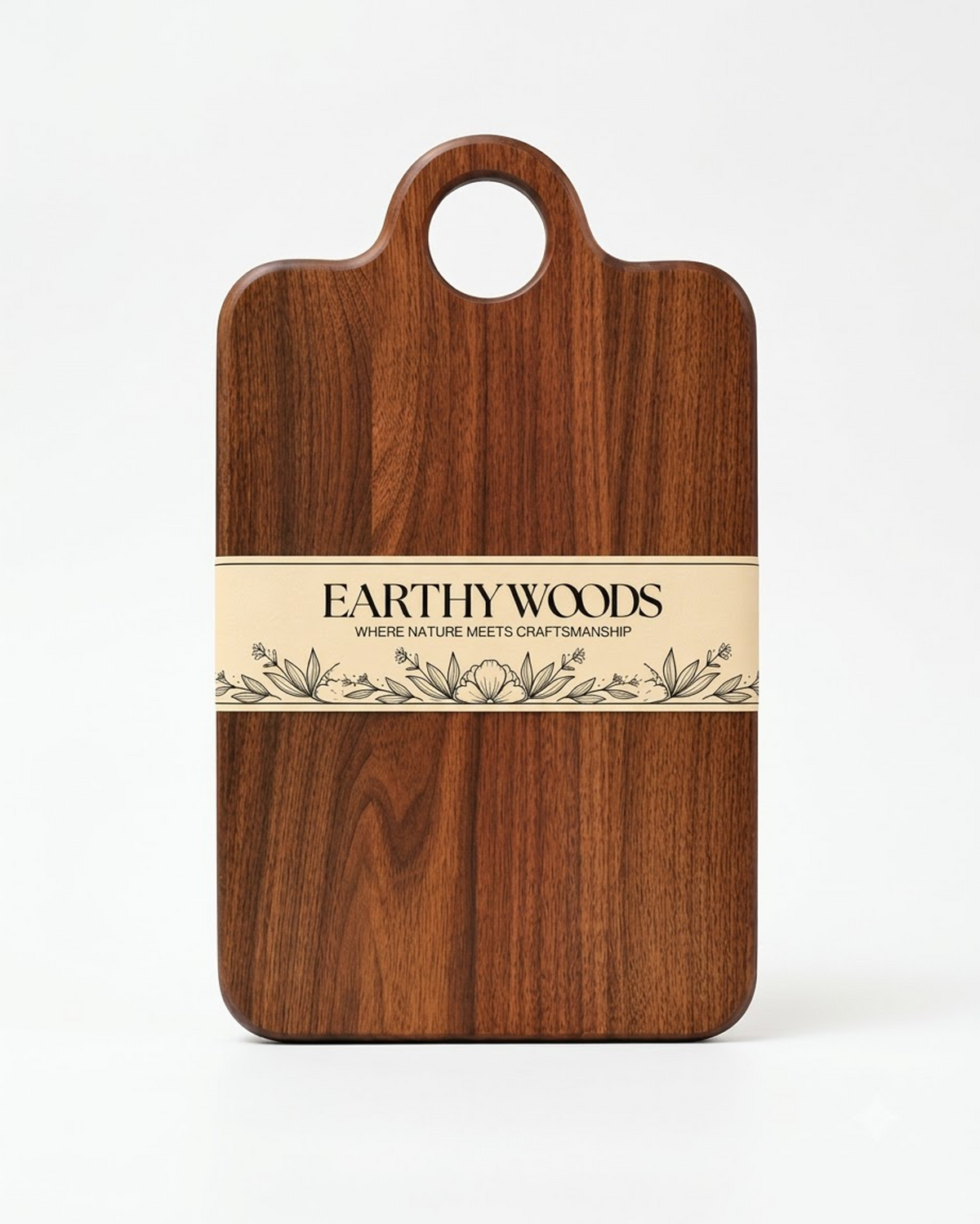
Explore the Earthy Woods Teak board design →
4. Sheesham (Indian Rosewood): rich grain and a substantial feel

Sheesham, botanically Dalbergia sissoo, is prized in Indian woodworking for its expressive grain, contrasting brown tones and relatively dense feel. It is sometimes called Indian Rosewood; this should not be confused with the separate species Dalbergia latifolia, which is also sold under that common name.
Sheesham can bring a bold, natural look to a kitchen and to serving occasions. It is relatively hard: published values place its Janka hardness around 1,660 lbf, compared with approximately 1,070 lbf for Teak. These are indentation-resistance measurements, not overall chopping-board scores. In fact, very hard boards can be less forgiving on knife edges.
Discover the Earthy Woods Indian Rosewood board →
Bamboo vs Acacia vs Teak vs Sheesham: at a glance
| What to compare | Bamboo | Acacia | Teak | Sheesham |
|---|---|---|---|---|
| Material | Woody grass | Hardwood group | Hardwood | Hardwood |
| Typical look | Light, striped | Wide colour variation | Warm golden brown | Rich, contrasting brown |
| Construction | Usually bonded strips | Varies by product | Solid or joined boards | Solid or joined boards |
| Price position | Often accessible | Budget to premium | Often premium | Often premium |
| Main appeal | Practical everyday use | Distinctive grain | Classic restrained elegance | Bold grain and substantial feel |
General guidance only. Actual quality depends on the species, construction, finish and care of the specific board.
So what makes a chopping board truly premium?
Beautiful wood is the beginning, not the entire story. Look for these essentials:
- Clear wood identification. Know what species or material you are buying.
- Appropriate drying and construction. Well-prepared timber and sound joinery can reduce avoidable movement or joint problems.
- Useful thickness and stable proportions. A substantial board can feel secure, but weight alone is not a quality certificate.
- Thoughtful detailing. Comfortable edges, consistent sanding and a carefully finished surface improve usability.
- Food-contact suitability. Ask about any adhesives and finishes used on the cutting surface.
- Easy maintenance. Choose a surface you can clean, dry and maintain properly.
And remember: “solid wood” does not always mean “one unjoined piece.” Many high-quality solid-wood boards use properly joined pieces of hardwood. Construction should be described honestly.
Which wood should you choose?
If you want a lightweight everyday board, consider a well-made bamboo design. If you love varied natural colour, a thoughtfully constructed Acacia board may suit you. If you appreciate restrained golden-brown elegance, explore Teak. If deep natural grain and a bold hardwood presence speak to you, Sheesham deserves a closer look.
None is universally “best”. Your knives, preparation habits, cleaning routine, preferred appearance and budget should all be part of the decision.
How to care for your wooden chopping board
Wash after use, avoid leaving the board submerged, and dry it fully. Follow the maker’s cleaning instructions. Keep wooden boards out of the dishwasher unless the manufacturer expressly states they are dishwasher-safe. Condition with a suitable food-grade board oil when recommended, and replace a board when deep grooves or damage make it difficult to clean.
THE EARTHY WOODS PHILOSOPHY
Real wood. Thoughtful craftsmanship. Timeless character.
At Earthy Woods, we celebrate the unique patterns of natural hardwood and the craftsmanship behind objects used every day. A chopping board is more than a kitchen accessory—it can be a useful, beautiful part of home life.
True luxury is not simply about paying more. It is about knowing what you are paying for.
Further reading and photo credits
Material information: The Wood Database: Teak, Sheesham, and Cutting-board woods. The bamboo and Acacia reference images above are credited to their photographers under the linked Creative Commons licences. Earthy Woods product images show our own listed designs.