
Board care / The everyday handbook
Care is part
of the craft.
A wooden board asks for a simple routine, not complicated maintenance. Give cleaning, drying and occasional conditioning a place in your everyday rhythm.
Begin the care ritual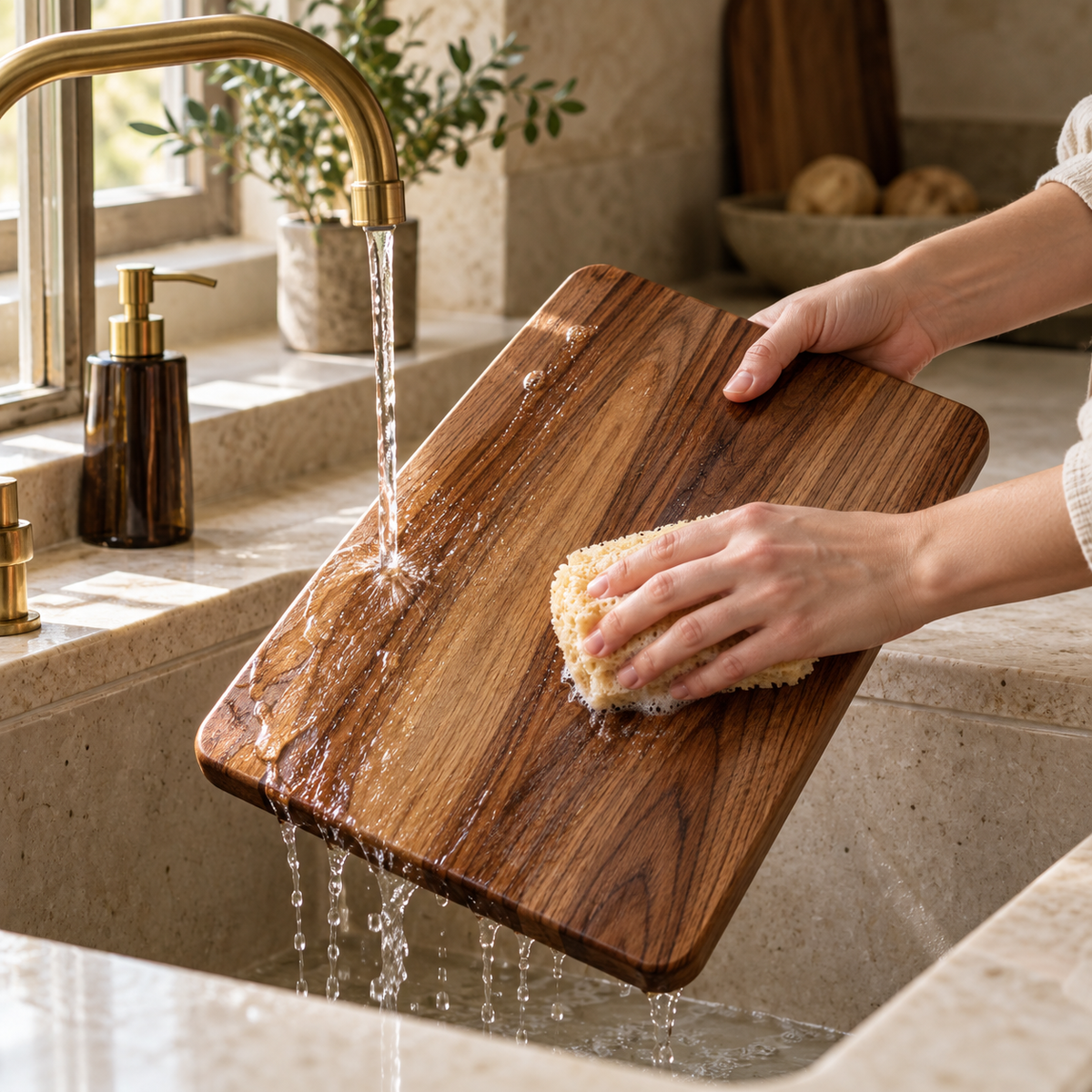
Illustrative care demonstration.
01 / After each use
Clean gently.
Clear away food residue, then hand wash the board with warm water and gentle dish soap.
- Use a soft sponge or cloth, paying attention to edges and grooves.
- Rinse promptly and wipe away the remaining moisture.
- Keep washing brief; do not soak the board or leave it in a full sink.
Keep wooden boards out of the dishwasher unless your board’s own instructions explicitly say otherwise.
Illustrative care demonstration.
02 / After every wash
Let both sides breathe.
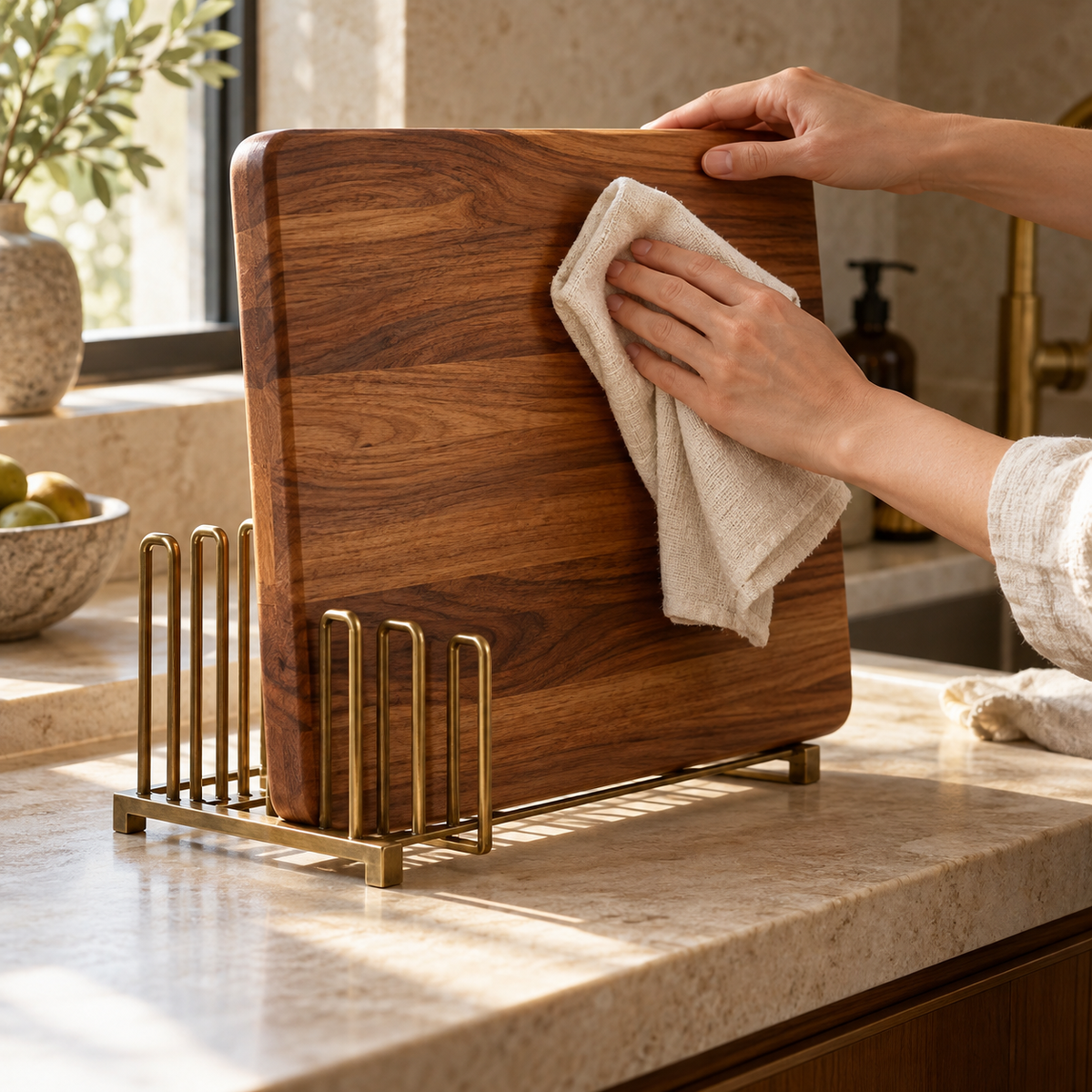
Towel-dry the surface, then stand the board upright so air can reach both faces.
- Use a clean towel and remove moisture from the groove and edges.
- Choose a stable, ventilated drying spot.
- Let it dry fully before returning it to a cupboard.
A wet board left flat on the counter can trap moisture underneath.
Illustrative care demonstration.
03 / When the surface needs it
Condition with intention.
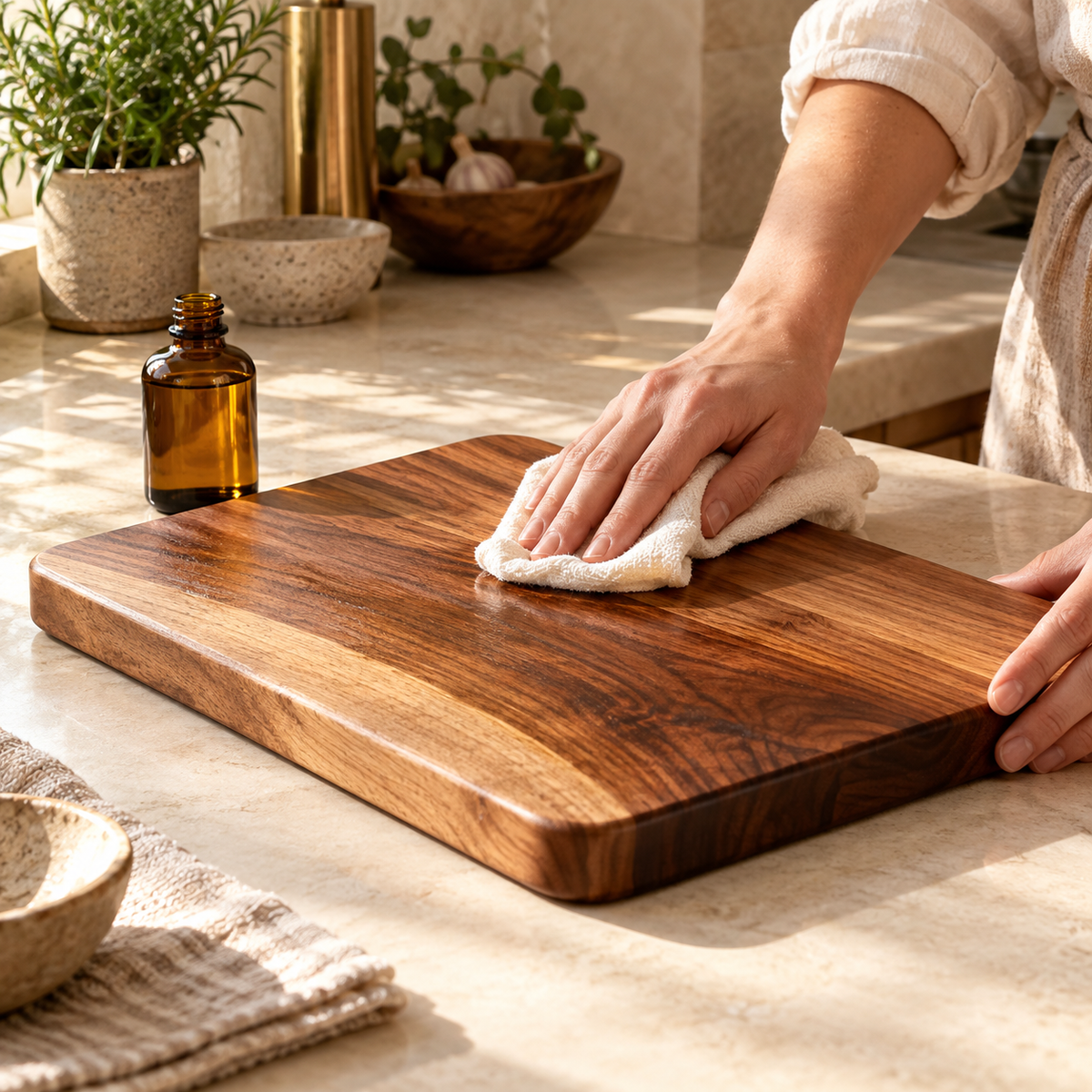
For boards designed to be oiled, check the surface regularly. A dry or dull appearance can signal that it is time to follow the board’s conditioning instructions.
- Begin with a clean, completely dry board.
- Apply a compatible food-grade board treatment as directed on its label, including edges if recommended.
- Allow the stated absorption time, then wipe off excess.
Do not use furniture polish or assume every finish accepts oil. Ask us if you are unsure about your particular board.

Illustrative care demonstration.
04 / Between meals
Store it thoughtfully.
Keep the board dry and away from direct heat.
- Choose a ventilated place away from a stove or radiator.
- Avoid leaving it in strong direct sunlight or a damp cupboard.
- Use a stable position that keeps it from falling or bending under other items.
Use a trivet for hot pans; a chopping board is not a heat pad.
A small care kit
Only a few essentials.
Keep a soft cloth, gentle dish soap and a clean drying space close at hand. If your board’s finish is suitable for oiling, use a food-grade cutting-board treatment approved for that finish.
These are general care notes for wooden chopping boards. The care instructions supplied with your specific board and the treatment product’s label take priority.
Questions, answered
A little more know-how.
How often should I oil my board?
There is no one schedule for every board or kitchen. Follow the instructions supplied with your board, checking regularly for dryness. Use, washing frequency and the board’s finish all matter.
Which oil or conditioner should I use?
Choose a food-grade cutting-board treatment compatible with your board’s finish, and follow its label. Do not substitute furniture products. Contact us with the product name if you need help identifying a suitable treatment.
Can I use the same board for raw meat and salad?
Use separate boards for raw meat, poultry or seafood and for food that will be eaten without further cooking. Wash boards after use. This helps avoid cross-contamination.
What should I do about smells or stains?
Clean promptly with gentle dish soap and dry fully. Persistent odours or stains need a treatment suitable for the specific wood and finish. Contact us before using abrasives, strong chemicals or attempting sanding.
Do lemon or vinegar replace sanitizing?
Odour removal is different from sanitizing. For raw-food handling, follow food-safety guidance and the label of a board-compatible sanitizing product. Keep raw-meat prep separate from ready-to-eat foods.
Are knife marks and colour variation normal?
Natural grain and colour variation give each board its character. Everyday knife marks are different from deep grooves, splits or splinters. Inspect the surface regularly and stop using it if damage makes it hard to clean.
What if my board cracks, splinters or becomes uneven?
Stop using a board with a split, loose splinters or a surface that cannot be properly cleaned. Send us photographs and the product details for advice. Do not try to fix food-contact surfaces with household glue.
Should I oil a painted, coated or decorative piece?
Only apply a treatment recommended for that product’s finish. This guide focuses on wooden chopping boards; decorative and coated items may need different care. Follow the individual product instructions.
How do I contact Earthy Woods about my board?
Use the contact page and include the board’s product name, when you purchased it, how you clean it and a clear photo of the issue. These details help us give guidance for your particular piece.
For food-preparation hygiene, see USDA cutting-board guidance
Good wood / Thoughtful care