
October 09, 2026
What Size Wooden Chopping Board Do You Need? A Practical Buying Guide
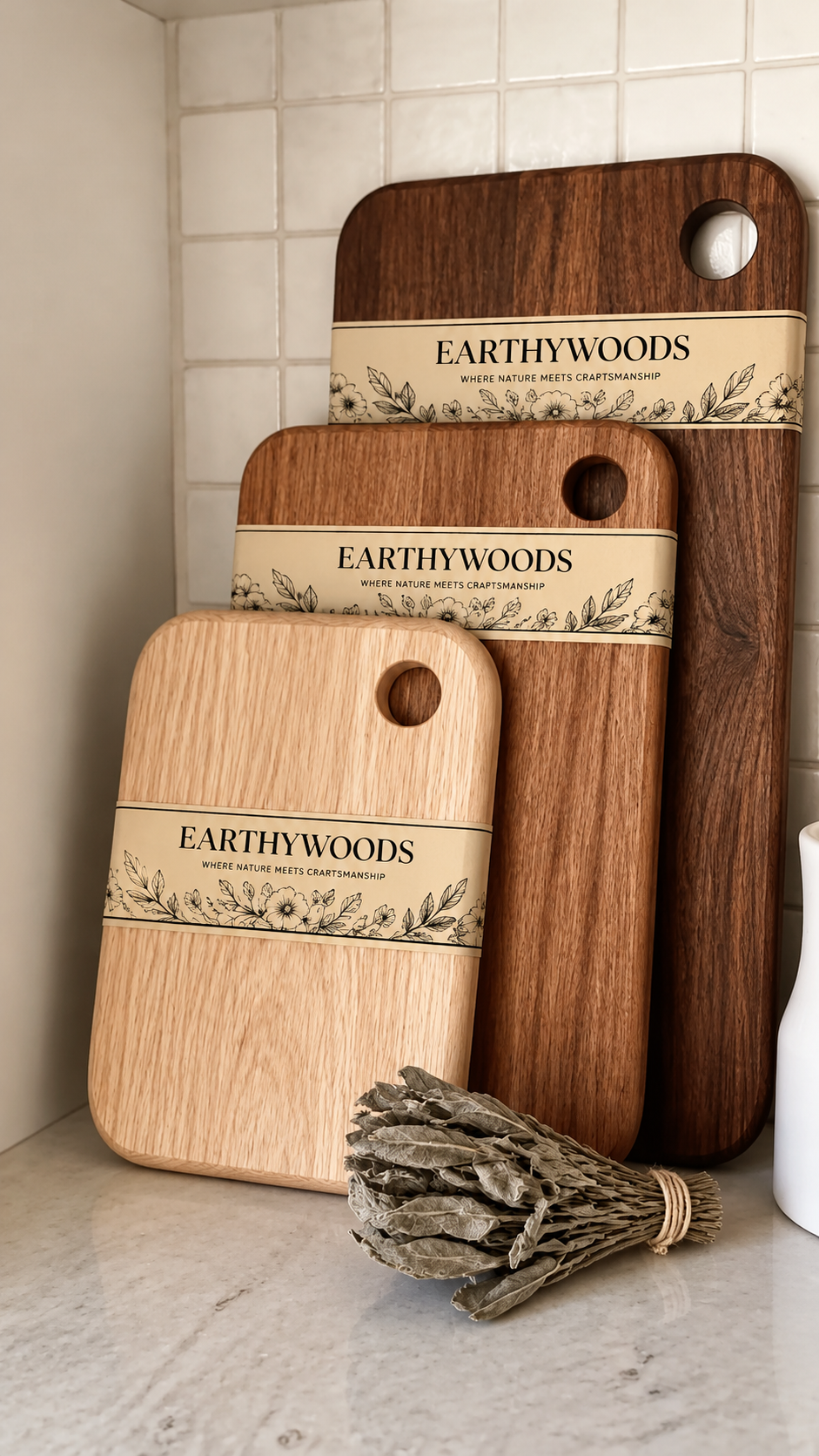
The right wooden chopping board is the one that fits both your preparation routine and your kitchen. A large board gives ingredients more room, but it also needs space in the sink and a dry place to stand. A smaller board is convenient for a lime or a handful of herbs, yet can feel crowded during a full meal.
Start with four checks: usable cutting surface, thickness and weight, washing space, and storage. This guide helps you compare those details without treating one size as the answer for every home.
Choose the usable surface before the overall dimensions
A handle and a perimeter groove are useful features, but they take up part of a board's overall footprint. Look at the product photographs as well as the dimensions. Ask whether there is room for your ingredients beside the area where your knife will work.
Measure a clear section of your counter. Then check whether you can turn the board comfortably while washing it. A board that fills the whole counter or is awkward to lift may be less useful than a slightly smaller option.
Compact boards for small preparation jobs
A small rosewood chopping board suits herbs, fruit and quick portions. A mini tear-drop board can be convenient for garnishes or small-format serving. Compare their listed dimensions and photographs before deciding how much cutting space you need.
A compact board can complement a larger everyday board. It saves bringing out a substantial surface for a small task, but it should still give your hand and knife enough room.
Larger boards for an everyday preparation routine
If you prepare several ingredients together, more surface area helps you organise the work. The 12 × 13 inch Indian rosewood board offers a broad footprint and a listed 1.2 inch thickness.
The 15 × 10 inch teak chopping board has a listed 1.5 inch thickness, a perimeter groove and an integrated side grip. Compare the shape with your counter: a longer rectangle and a broader footprint can feel different even when both provide a generous surface.
Thickness is a separate choice
Thickness contributes to a board's substantial feel, but it does not tell you its exact weight. Wood species, shape and construction also matter. Check product specifications or contact the store if weight is an important part of your decision.
The 15 × 10 × 2 inch live-edge rosewood cutting board has an extra-thick profile and an organic edge. Allow for that edge when considering the usable work area and how you will carry and store it.
Handles and serving shapes
A wooden chopping board with handle is worth considering if you often carry the board from the counter to the table. Slim and curved serving shapes can also work well for presentation. For a buying decision, compare the usable surface rather than choosing by appearance alone.
Plan the dry storage space
Every Earthy Woods chopping board includes a free 3D-printed wall mount. Follow the supplied fitting instructions and ensure the mount is installed securely. Do not assume the mount alone makes any wall or fixing suitable.
Let the board dry thoroughly before storing it, with air able to reach both faces. Avoid soaking and dishwasher cleaning, and follow the care instructions supplied with your product. Read the wooden chopping board care guide for the everyday routine.
A short buying checklist
- Measure your clear counter space and check the usable surface in the photos.
- Allow room for ingredients as well as cutting.
- Check thickness separately from overall size; ask for weight if needed.
- Make sure the board can be washed and lifted comfortably.
- Plan a dry storage position before ordering.
Explore the Earthy Woods wooden chopping board collection to compare current designs. Natural grain, colour and markings vary between pieces; the product listing is the source for each design's specifications.