
October 10, 2026
Do You Need a Juice Groove on a Wooden Chopping Board?
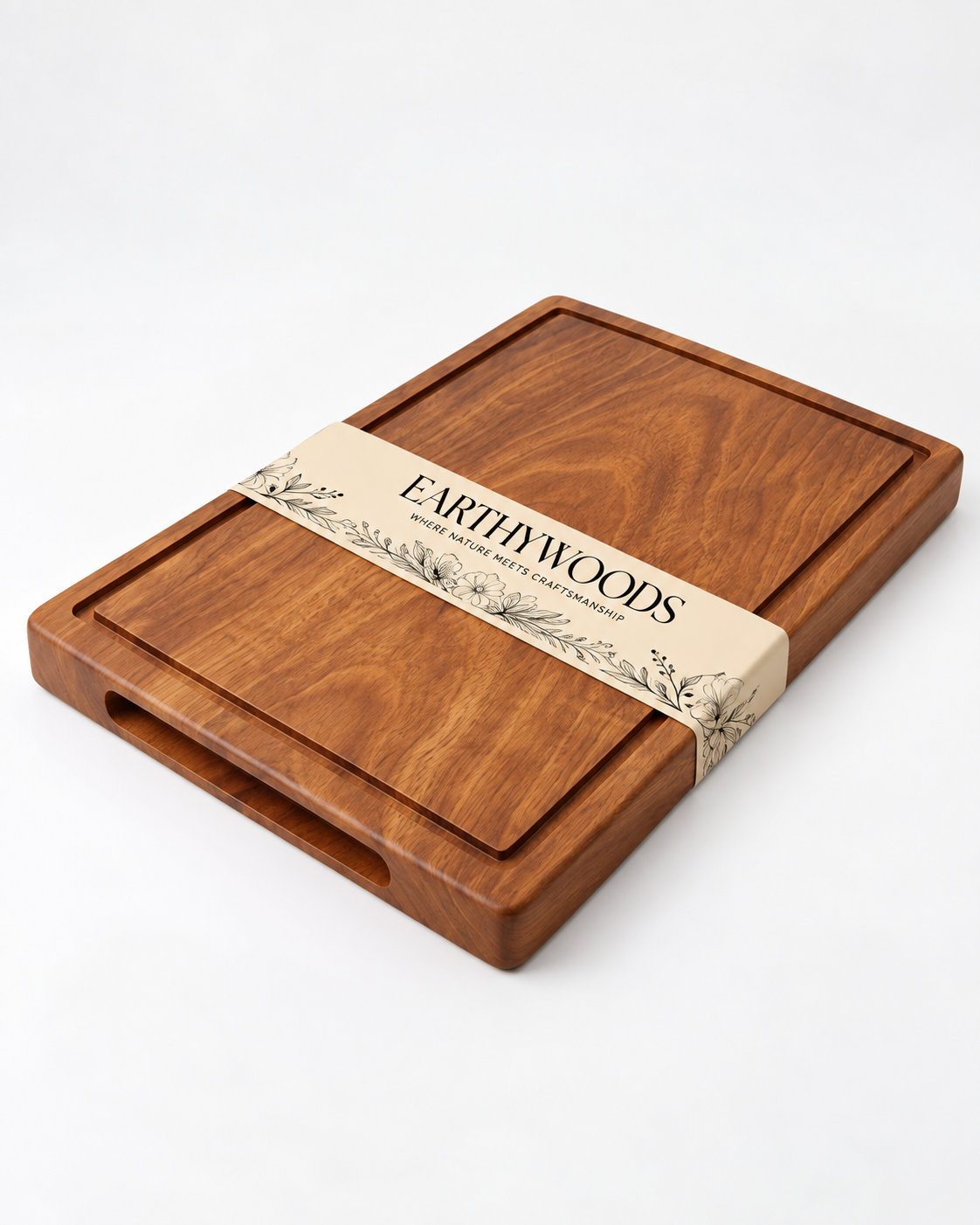
A groove around the edge of a wooden chopping board can look like a small design detail. In daily preparation, it has a specific purpose: giving some liquid and loose crumbs a place to collect before they reach the counter. Whether that detail is useful depends on what you cut and how you organise your preparation.
A grooved board is worth considering for juicy fruit and ingredients that leave moisture behind. It is not a requirement for every kitchen, and it does not replace a comfortable, clear cutting area. Here is how to decide whether the feature belongs in your routine.
What does a juice groove actually do?
A juice groove is a recessed channel near the perimeter of the board. Liquid reaching that part of the surface can collect in the channel rather than immediately running over the edge. Crumbs may collect there too. The groove has limited capacity: it is not a bowl, and a board with a groove can still spill if there is too much liquid or you tilt it while carrying.
Earthy Woods' 15 × 10 × 1.5 inch teak chopping board lists a deep perimeter groove and integrated side grip. Those are separate features: the groove helps contain juices and crumbs, while the side grip provides a place to lift the board.
Match the feature to the ingredients you prepare
Think about your ordinary meals before choosing by appearance. If you often slice tomatoes, cut ripe fruit or prepare ingredients that release liquid, a perimeter channel may be useful. If most of your work involves small portions of herbs or dry ingredients, it may be a less important part of the decision.
The useful question is not whether a groove makes a board more premium. It is whether you regularly need that collection space. A simpler outline can suit one routine just as well as a grooved design suits another.
Look at the cutting area inside the channel
Overall dimensions describe the board's footprint, not necessarily the uninterrupted space available for your knife. A groove occupies part of that footprint. Compare photographs carefully and look at the central area where you will work, especially if you like keeping several ingredients on the board at once.
There is no universal groove width that suits everyone. A broad working surface may matter more than the channel for full meal preparation. Our wooden chopping-board size guide explains how to compare usable space with your counter and washing area.
Read the listing rather than assuming specifications
A photograph can show where a groove sits, but it cannot reliably tell you its liquid capacity. Unless a listing provides a measured figure, do not assume how much it holds. The same applies to board weight: thickness alone does not give an exact lifting weight.
Check the stated dimensions, the location of any grips, and the photographs of the edges. If a particular measurement affects your purchase, ask the store before ordering. A clear answer is more useful than judging scale from a styled image.
Include the groove in your cleaning routine
The channel is another part of the board that needs attention after use. Check it for remaining food rather than looking only at the flat centre. Follow the instructions supplied with your board; the Earthy Woods board-care guide covers the wider cleaning, drying and storage routine.
A simple way to choose
Choose a groove because it serves your preparation habits. Check that the remaining cutting area feels generous enough, that the board is practical to lift, and that you are comfortable cleaning the channel. Then compare shape and grain as part of the overall design.
Browse the wooden chopping-board collection to compare the grooved teak design with other current shapes. The most useful board is the one whose details make your everyday work easier.